Life in Louisiana, much like the rest of the United States, moved at a lot slower pace in the 30s than it does today. Yet, there were no shortages of troubles. The song by Alabama folk singer Vera Hall comes to mind.
The Great Depression was one of the largest troubles throughout most of the 1930s and affected economies worldwide. With Louisiana being a major agricultural state in the South, these economic problems led to the downfall of many farms. Especially those owned by poor whites and poor blacks alike. Prices of goods fell to all-time lows and many farmers couldn't afford to keep their farms. In turn, workers weren't able to get paid or had to settle for even lower wages at plantations or at other jobs. It was bad enough that many families in rural Louisiana already lived in poverty. The Great Depression made it far worse. As had the drought of 1930-1931 where many families had to apply to get aid from the American Red Cross. More on this can be read at https://64parishes.org/entry/great-depression-in-louisiana
A poem by Langston Hughes, Let America Be America Again, was written during the time of the Great Depression. In it is a section that is an expression of how many citizens felt at the time. Especially in the Southern States where many working-class citizens were affected. Most of us have not learned about the details of this shared history but it was immigrants, more recent descendants of immigrants, descendants of slaves, Native Americans, and owners of small farms who were mainly affected. This while larger farms (wealthy plantations) in the South thrived due to the cheaper labor and other factors. They proudly took advantage of the economic troubles to the detriment of nearly everyone else. See: Were there successful farming plantations during the Great Depression?
"I am the poor white, fooled and pushed apart,
I am the Negro bearing slavery’s scars.
I am the red man driven from the land,
I am the immigrant clutching the hope I seek--
And finding only the same old stupid plan
Of dog eat dog, of mighty crush the weak."
Those who were just scraping by before the Great Depression, many of them felt the brunt of the blow of economic troubles. Yet they persevered. Many of these photos display the strong character of those days and of the past. Which was not only a trait of Louisiana but also of Americans from other states and walks of life during the Great Depression.


1936; Works Progress Administration night school for African Americans in the town of Kenner, Jefferson Parish
By Uncredited WPA photographer (Works Progress Administration photo, via [1]) [Public domain], via Wikimedia Commons




An image of musician Cléoma Breaux with her husband Joe Falcon
See page for author [Public domain], via Wikimedia Commons

African American musicians playing guitars on St. Joseph's Day Night,St. Joseph's Day is the traditional post-Mardi Gras last gathering of the season for the "Mardi Gras Indians" organizations.
By Unnamed WPA photographer (WPA photo via [1]) [Public domain], via Wikimedia Commons

Young woman with umbrella, Louisiana, July 1937
Dorothea Lange [Public domain], via Wikimedia Commons

Men standing on the sidewalk outside Federal Emergency Relief Administration office. October 1935
Location seems to be S. Claiborne Avenue between Washington Avenue and 4th Street, on the lakewards side of the street.
By Ben Shahn [Public domain], via Wikimedia Commons

Spiritual meeting at Father Treadwell's Church in New Orleans Louisiana in the 1930s. Church of God in Christ. Rev. Lucien H. Treadwell, Pastor.
By Unnamed WPA photographer (Works Progress Administration photograph via [1]) [Public domain], via Wikimedia Commons

Three Creole Girls, Plaquemines Parish, Louisiana, October 1935
By Ben Shahn [Public domain], via Wikimedia Commons

Men talking on a porch of a small store near Jeanerette, Louisiana. October 1938. Iberia Parish, Louisiana
Russell Lee [Public domain], via Wikimedia Commons

Drinking beer at the bar, Raceland, Louisiana. September 1938
Russell Lee [Public domain], via Wikimedia Commons

Two boys leaning on fence watching parade, state fair, Donaldsonville, Louisiana, November 1938
Russell Lee [Public domain], via Wikimedia Commons
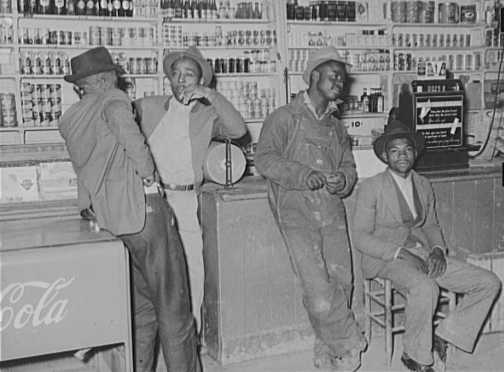
Men in cooperative general store. Transylvania, Louisiana, January 1939
Russell Lee [Public domain], via Wikimedia Commons
 Mother teaching children numbers and alphabet in the home of a sharecropper. Transylvania, Louisiana. January 1939
Russell Lee [Public domain], via Wikimedia Commons

New Orleans Mardi Gras, 1936. 3 street costumers dressed as clowns.
By Unnamed WPA photographer (WPA photo via [1]) [Public domain], via Wikimedia Commons

2 African American men sitting playing Conquian (card game), September 1938.
Russell Lee [Public domain], via Wikimedia Commons

Dancing at bar in Raceland, Louisiana, September 1938.
Russell Lee [Public domain], via Wikimedia Commons
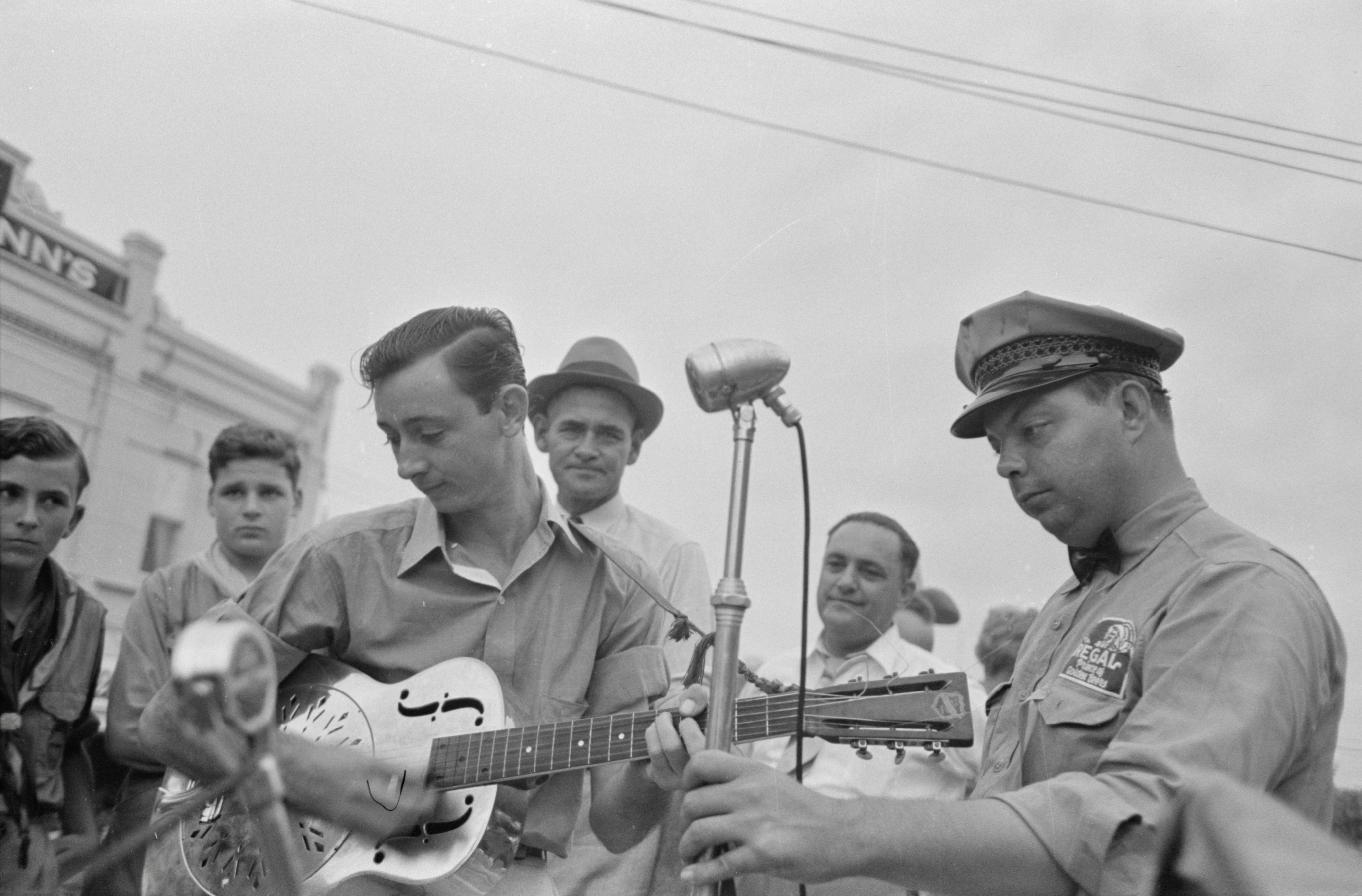
Steel guitarist at microphone, Cajun band contest, National Rice Festival, Crowley Louisiana, October 1938
Russell Lee [Public domain], via Wikimedia Commons
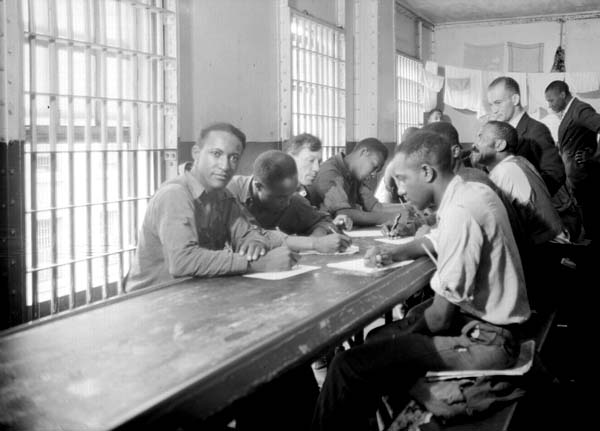
Literacy class at the Parish Prison, New Orleans. February 16, 1937
By Uncredited WPA photographer (WPA photo via [1] # 17.33) [Public domain], via Wikimedia Commons

Photograph of WPA Education — Radio Class, Magnolia School, 2246 Carondelet Street, New Orleans. January 18, 1937
By Works Progress Administration [Public domain], via Wikimedia Commons
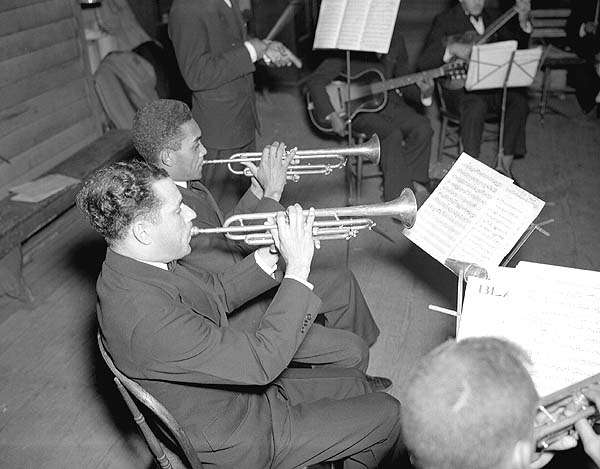
Trumpet players with WPA band, New Orleans, November 30, 1937
By Uncredited photographer for the Works Progress Administration, a U.S. Federal Government agency. [Public domain], via Wikimedia Commons
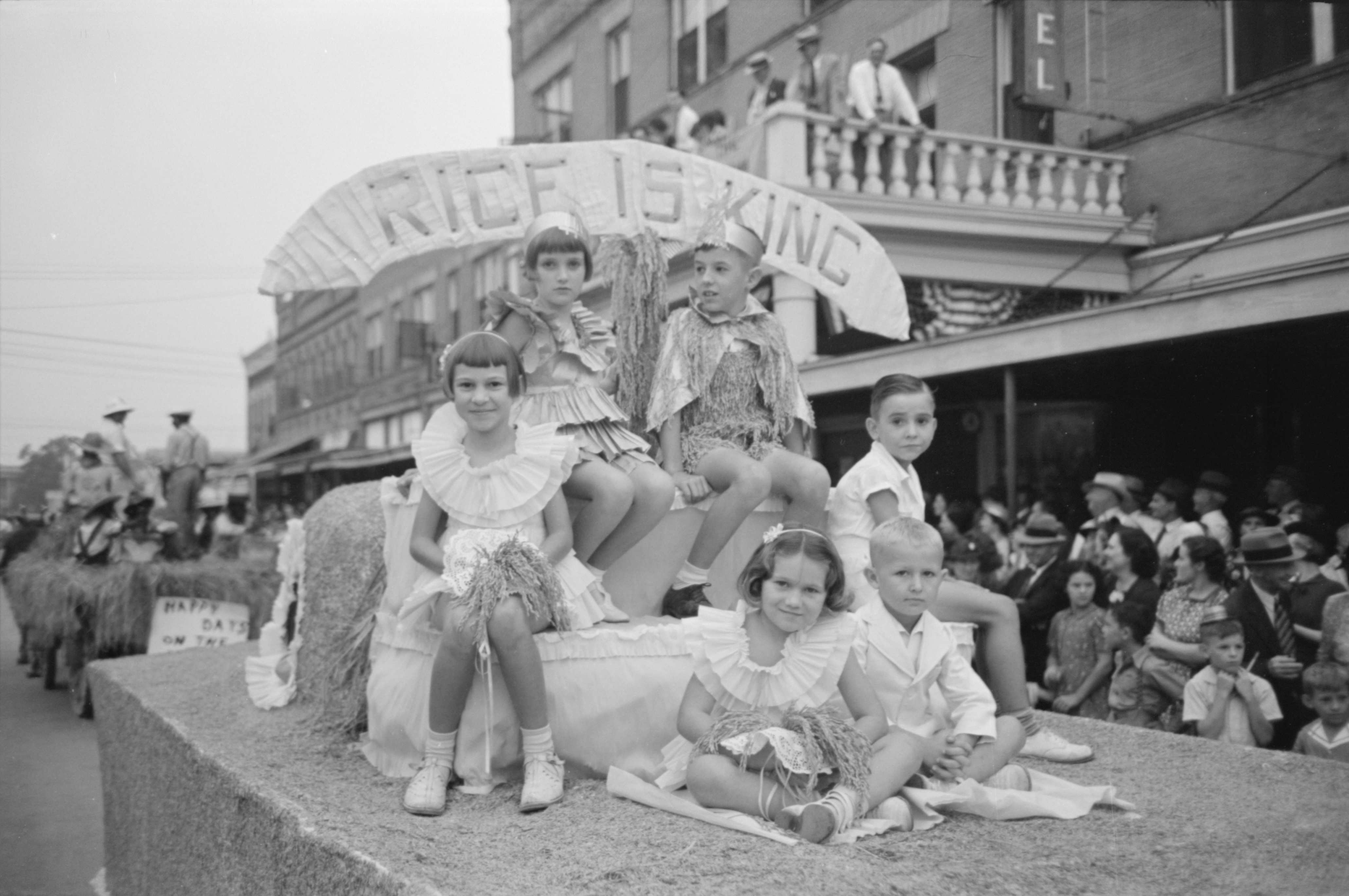
Children on parade float with the inscription "Rice Is King", National Rice Festival, Crowley, Louisiana., October 1938.
By Russell Lee [Public domain], via Wikimedia Commons
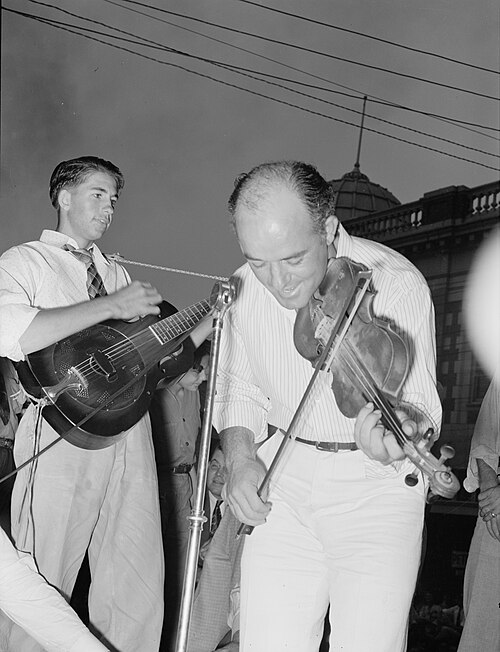
Musicians in Cajun band contest, National Rice Festival, Crowley, Louisiana. October 1938
By Russell Lee [Public domain], via Wikimedia Commons
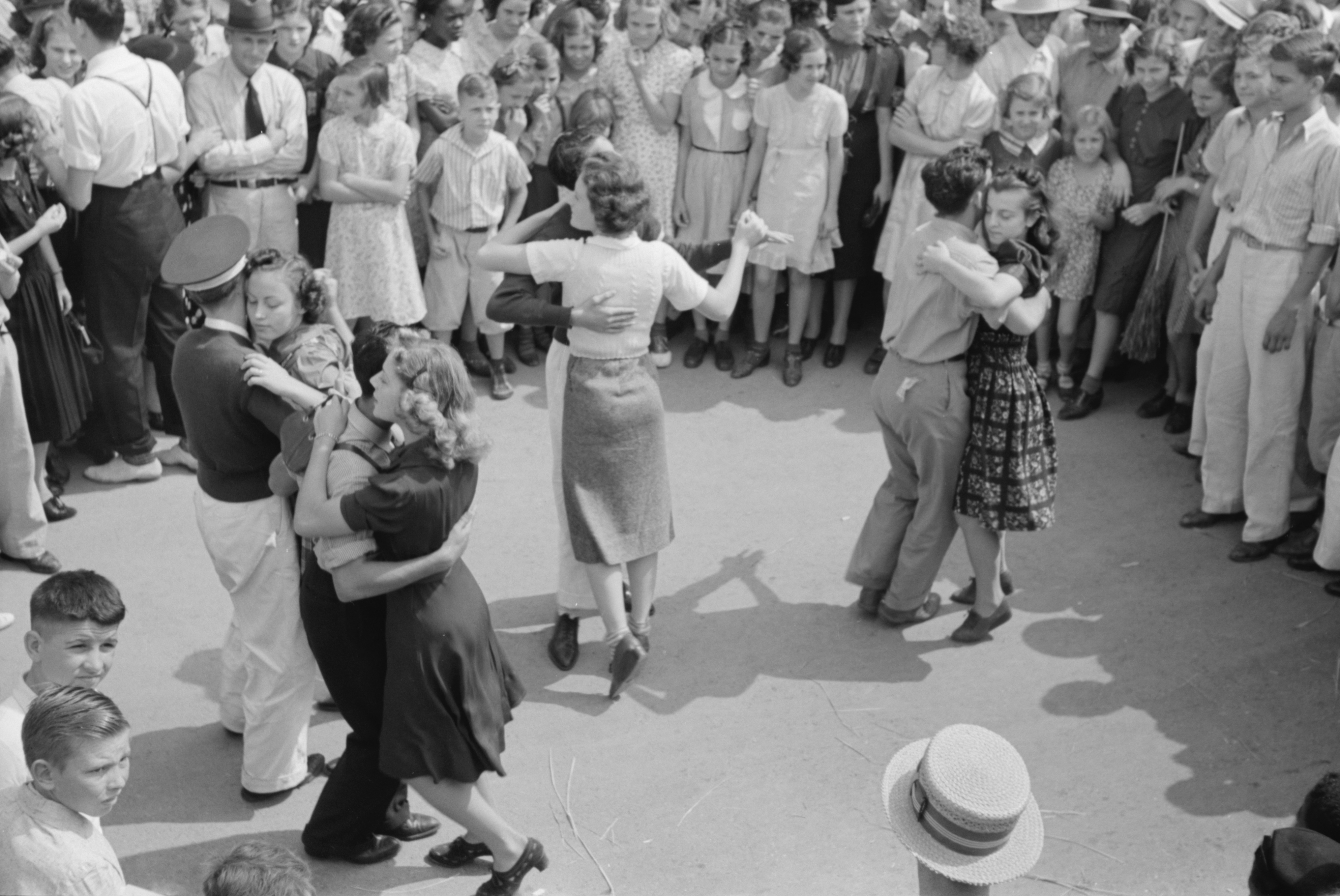
Street dancing, National Rice Festival, Crowley Louisiana, October 1938
Russell Lee [Public domain], via Wikimedia Commons

A store with live fish for sale, vicinity of Natchitoches, Louisiana. 1939
By Wolcott, Marion Post, 1910-1990, photographer [Public domain], via Wikimedia Commons

Title: A cross roads store, bar, "juke joint," and gas station in the cotton plantation area, Melrose, Louisiana. 1939
By Wolcott, Marion Post, 1910-1990, photographer [Public domain], via Wikimedia Commons
Cléoma Breaux Falcon
The Great Depression was one of the largest troubles throughout most of the 1930s and affected economies worldwide. With Louisiana being a major agricultural state in the South, these economic problems led to the downfall of many farms. Especially those owned by poor whites and poor blacks alike. Prices of goods fell to all-time lows and many farmers couldn't afford to keep their farms. In turn, workers weren't able to get paid or had to settle for even lower wages at plantations or at other jobs. It was bad enough that many families in rural Louisiana already lived in poverty. The Great Depression made it far worse. As had the drought of 1930-1931 where many families had to apply to get aid from the American Red Cross. More on this can be read at https://64parishes.org/entry/great-depression-in-louisiana
A poem by Langston Hughes, Let America Be America Again, was written during the time of the Great Depression. In it is a section that is an expression of how many citizens felt at the time. Especially in the Southern States where many working-class citizens were affected. Most of us have not learned about the details of this shared history but it was immigrants, more recent descendants of immigrants, descendants of slaves, Native Americans, and owners of small farms who were mainly affected. This while larger farms (wealthy plantations) in the South thrived due to the cheaper labor and other factors. They proudly took advantage of the economic troubles to the detriment of nearly everyone else. See: Were there successful farming plantations during the Great Depression?
"I am the poor white, fooled and pushed apart,
I am the Negro bearing slavery’s scars.
I am the red man driven from the land,
I am the immigrant clutching the hope I seek--
And finding only the same old stupid plan
Of dog eat dog, of mighty crush the weak."
Those who were just scraping by before the Great Depression, many of them felt the brunt of the blow of economic troubles. Yet they persevered. Many of these photos display the strong character of those days and of the past. Which was not only a trait of Louisiana but also of Americans from other states and walks of life during the Great Depression.

Florestine Carson, unemployed Creole Negro trapper, and daughter, Plaquemines Parish, Louisiana.
By Ben Shahn (FSA photo by Ben Shahn via [1]) [Public domain], via Wikimedia Commons
By Ben Shahn (FSA photo by Ben Shahn via [1]) [Public domain], via Wikimedia Commons

Citizenship Class in the Hungarian Settlement in Livingston Parish Louisiana - Albany, Louisiana
By Uncredited photographer for the WPA (Works Progress Administration photo via [1]) [Public domain], via Wikimedia Commons
By Uncredited photographer for the WPA (Works Progress Administration photo via [1]) [Public domain], via Wikimedia Commons

1936; Works Progress Administration night school for African Americans in the town of Kenner, Jefferson Parish
By Uncredited WPA photographer (Works Progress Administration photo, via [1]) [Public domain], via Wikimedia Commons

"Negro school, Destrehan, Louisiana", September 1938
Russell Lee [Public domain], via Wikimedia Commons
Russell Lee [Public domain], via Wikimedia Commons

Musicians playing accordion and washboard in front of a store, near New Iberia, Louisiana. November 1938
Russell Lee [Public domain], via Wikimedia Commons
Russell Lee [Public domain], via Wikimedia Commons

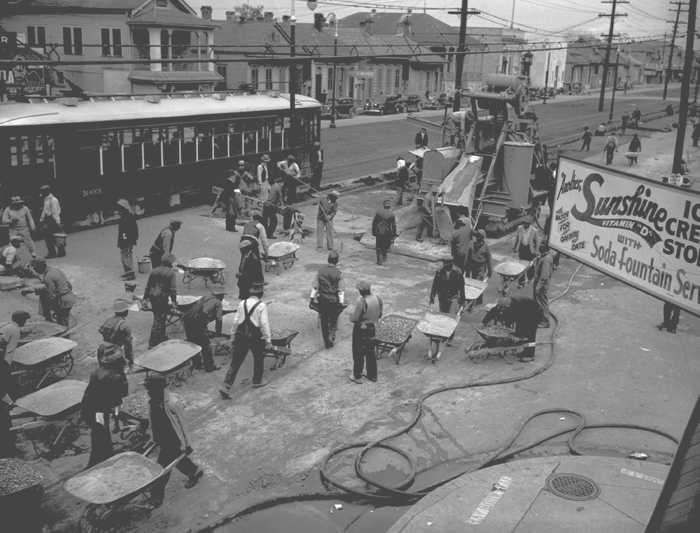
WPA work repaving and widening on St. Claude Avenue, view at the corner of Mandeville Street, with St. Claude
By Uncredited Works Progress Administration photographer (WPA photo via [1]) [Public domain], via Wikimedia Commons
By Uncredited Works Progress Administration photographer (WPA photo via [1]) [Public domain], via Wikimedia Commons

New Roads Louisiana in 1938. Looking across the railroad tracks into the African American section of New Roads, Louisiana. Store sign reads: Felix Fazenda Fine Wines and Liquors. Morning Treat. Signs also for Jax beer, RC Cola, and the Cresent Saloon.
Russell Lee [Public domain], via Wikimedia Commons
Russell Lee [Public domain], via Wikimedia Commons

An image of musician Cléoma Breaux with her husband Joe Falcon
See page for author [Public domain], via Wikimedia Commons

African American musicians playing guitars on St. Joseph's Day Night,St. Joseph's Day is the traditional post-Mardi Gras last gathering of the season for the "Mardi Gras Indians" organizations.
By Unnamed WPA photographer (WPA photo via [1]) [Public domain], via Wikimedia Commons

Young woman with umbrella, Louisiana, July 1937
Dorothea Lange [Public domain], via Wikimedia Commons

Men standing on the sidewalk outside Federal Emergency Relief Administration office. October 1935
Location seems to be S. Claiborne Avenue between Washington Avenue and 4th Street, on the lakewards side of the street.
By Ben Shahn [Public domain], via Wikimedia Commons

Spiritual meeting at Father Treadwell's Church in New Orleans Louisiana in the 1930s. Church of God in Christ. Rev. Lucien H. Treadwell, Pastor.
By Unnamed WPA photographer (Works Progress Administration photograph via [1]) [Public domain], via Wikimedia Commons

Three Creole Girls, Plaquemines Parish, Louisiana, October 1935
By Ben Shahn [Public domain], via Wikimedia Commons

Men talking on a porch of a small store near Jeanerette, Louisiana. October 1938. Iberia Parish, Louisiana
Russell Lee [Public domain], via Wikimedia Commons

Drinking beer at the bar, Raceland, Louisiana. September 1938
Russell Lee [Public domain], via Wikimedia Commons

Two boys leaning on fence watching parade, state fair, Donaldsonville, Louisiana, November 1938
Russell Lee [Public domain], via Wikimedia Commons

Men in cooperative general store. Transylvania, Louisiana, January 1939
Russell Lee [Public domain], via Wikimedia Commons

Russell Lee [Public domain], via Wikimedia Commons

New Orleans Mardi Gras, 1936. 3 street costumers dressed as clowns.
By Unnamed WPA photographer (WPA photo via [1]) [Public domain], via Wikimedia Commons

2 African American men sitting playing Conquian (card game), September 1938.
Russell Lee [Public domain], via Wikimedia Commons

Dancing at bar in Raceland, Louisiana, September 1938.
Russell Lee [Public domain], via Wikimedia Commons

Steel guitarist at microphone, Cajun band contest, National Rice Festival, Crowley Louisiana, October 1938
Russell Lee [Public domain], via Wikimedia Commons

Literacy class at the Parish Prison, New Orleans. February 16, 1937
By Uncredited WPA photographer (WPA photo via [1] # 17.33) [Public domain], via Wikimedia Commons

Photograph of WPA Education — Radio Class, Magnolia School, 2246 Carondelet Street, New Orleans. January 18, 1937
By Works Progress Administration [Public domain], via Wikimedia Commons

Trumpet players with WPA band, New Orleans, November 30, 1937
By Uncredited photographer for the Works Progress Administration, a U.S. Federal Government agency. [Public domain], via Wikimedia Commons

Children on parade float with the inscription "Rice Is King", National Rice Festival, Crowley, Louisiana., October 1938.
By Russell Lee [Public domain], via Wikimedia Commons

Musicians in Cajun band contest, National Rice Festival, Crowley, Louisiana. October 1938
By Russell Lee [Public domain], via Wikimedia Commons

Street dancing, National Rice Festival, Crowley Louisiana, October 1938
Russell Lee [Public domain], via Wikimedia Commons
A store with live fish for sale, vicinity of Natchitoches, Louisiana. 1939
By Wolcott, Marion Post, 1910-1990, photographer [Public domain], via Wikimedia Commons

Title: A cross roads store, bar, "juke joint," and gas station in the cotton plantation area, Melrose, Louisiana. 1939
By Wolcott, Marion Post, 1910-1990, photographer [Public domain], via Wikimedia Commons
Plaquemines Parish
Plaquemines Parish is a parish in southeastern Louisiana, the state's largest by total area at 2,567 square miles (70% water), stretching 80 miles along the Mississippi River to the Gulf of Mexico. Formed in 1807 with a population of 23,515 (2020 census), it has no incorporated communities; the seat is Pointe à la Hache and the largest is Belle Chasse. Notable for its major port handling domestic traffic, significant crude oil production, historic sites like Fort Jackson, and vulnerability to hurricanes and flooding.
Hungarian Settlement, Livingston Parish
Hungarian Settlement is a historic rural community in eastern Livingston Parish, Louisiana, near Albany, established in 1896 by Hungarian immigrants Julius Bruskay, Adam Mocsary, and Theodore Zboray. Originally called Árpádhon ("home of Árpád"), it grew to become the largest rural Hungarian settlement in the US by 1920, with over 200 families transitioning from lumber mill work to strawberry farming. The community's heritage is preserved today through the Hungarian Settlement Museum and the Árpádhon Hungarian Settlement Cultural Association, which host events celebrating Magyar traditions.
Crowley, Louisiana
Crowley, Louisiana, is a city in Acadia Parish known as the Rice Capital of America due to its central role in the U.S. rice industry, producing about two-fifths of the nation's crop within a 50-mile radius. It hosts the International Rice Festival annually during the third weekend in October, Louisiana's oldest and largest agricultural festival, which began in 1937 as the National Rice Festival and draws tens of thousands with parades, contests, carnival rides, and rice-themed events. The festival celebrates the local rice farming economy and culture, with over seven million attendees since its start.
New Roads, Louisiana
New Roads is a small city and the parish seat of Pointe Coupee Parish, Louisiana, located along False River, a 22-mile oxbow lake formed from a former Mississippi River channel. One of Louisiana's oldest settlement areas, with roots in the 1720s French Le Poste de Pointe Coupée, it was named for a Spanish-built "new road" in 1776 and formally developed in 1822. Known as the "Little Carnival Capital" for its Mardi Gras celebrations since 1881, the town features a historic downtown with cultural sites, water recreation, and annual events.
Melrose, Louisiana
Melrose is an unincorporated community in Natchitoches Parish, Louisiana, best known for the Melrose Plantation, a National Historic Landmark within the Cane River Creole National Historical Park. The plantation, founded in the late 18th century by descendants of freed slave Marie Thérèse Coincoin and Claude Thomas Pierre Metoyer, features nine historic buildings, including the African House (built 1810-1815) and the French Creole-style Big House (1833). It preserves the legacy of the Isle Brevelle Creole community, the Civil War era, an early 20th-century artists' retreat, and works by folk artist Clementine Hunter, a former cook there.
St. Claude Avenue, New Orleans
St. Claude Avenue is a vibrant commercial street in New Orleans, stretching from the Marigny and Bywater neighborhoods through St. Roch and into the Lower Ninth Ward, crossing the Industrial Canal into Arabi. Revitalized post-Hurricane Katrina by artists and new residents, it features eclectic restaurants, bars, shops, live music venues, and cultural spots like the Lower Ninth Ward Living Museum. The Rampart–St. Claude Streetcar Line, restored in 2016, connects it to the French Quarter, while ongoing initiatives address blight and promote retail development.
National Rice Festival
The National Rice Festival, now known as the International Rice Festival, is an annual agricultural celebration in Crowley, Louisiana, honoring the rice industry that began in 1937 as a suggestion by state Commissioner Harry D. Wilson to boost local farming during the town's Golden Jubilee. Held each October after the rice harvest, it has grown into Louisiana's oldest and largest free agricultural festival, drawing tens of thousands with events like parades, a frog derby, rice eating contests, carnival rides, and live music. Crowley, dubbed the "Rice Capital of America," produces a significant portion of the nation's rice, making the festival a key highlight of its cultural and economic heritage.
Mardi Gras Indians
Mardi Gras Indians, also known as Black Masking Indians, are African American Carnival revelers in New Orleans who create and wear elaborate, hand-beaded suits inspired by Native American attire. This tradition emerged in response to racial exclusion from white Mardi Gras krewes, blending African rhythms, drumming, dance, and masking to honor enslaved people's alliances with Native Americans and celebrate Black heritage. Tribes parade on foot through neighborhoods on Mardi Gras Day, Saint Joseph's Day (March 19), and Super Sunday (the Sunday nearest Saint Joseph's Day), competing in friendly displays of the "prettiest" suits, with performances also appearing at events like the New Orleans Jazz & Heritage Festival.
WPA Night School
The WPA Night School in Kenner, Louisiana, was a Works Progress Administration (WPA) program established in 1936 to provide adult education to African Americans in Jefferson Parish during the Great Depression. Captured in a notable photograph by an uncredited WPA photographer, it exemplified New Deal efforts to promote literacy and skills training amid widespread segregation. The initiative addressed barriers to education for Black communities in the Jim Crow South.
Cléoma Breaux Falcon
Cléoma Breaux Falcon (May 27, 1906 – April 8, 1941) was an American guitarist and singer who, with her husband Joe Falcon, recorded the first known Cajun music commercial release, "Allons à Lafayette" (also known as "Lafayette"), on April 27, 1928, in New Orleans for Columbia Records. A pioneering female performer in Cajun music, she played guitar and fiddle, performed with her brothers in Crowley, Louisiana, during the 1910s and 1920s, and contributed to nearly 100 recordings with the Falcons and Breaux family for labels like Decca and Bluebird. Her emotional vocals and rhythmic guitar style influenced Cajun music traditions, blending in elements of blues, country, and popular songs, and she was inducted into the Cajun Music Hall of Fame in 2002 as the first woman.
Ben Shahn
Ben Shahn (1898–1969) was an American painter, printmaker, and photographer renowned for his social-documentary work capturing urban life and poverty during the Great Depression. In the early 1930s, he used a handheld 35mm Leica to photograph everyday scenes, immigrants, protests, and indigence in New York City's Lower East Side and midtown areas. From 1935 to 1938, recommended by Walker Evans, he contributed part-time to the Resettlement Administration (later Farm Security Administration), documenting rural poverty in the American South while viewing photography as raw material for his paintings.
Dorothea Lange
Dorothea Lange (1895–1965) was an American documentary photographer renowned for her Depression-era images that humanized the struggles of migrant workers and the unemployed, most famously Migrant Mother (1936). Working for the Farm Security Administration from 1935 to 1939, she captured the social and economic impacts of the Great Depression, transitioning from studio portraiture to pioneering documentary photography. Lange also documented Japanese American internment during World War II for the War Relocation Authority, received the first Guggenheim Fellowship awarded to a woman in 1941, and co-founded the photography magazine Aperture in 1952.
Russell Lee
Russell Lee (1903–1986) was an American photographer and photojournalist best known for his extensive work with the Farm Security Administration (FSA) during the Great Depression, producing nearly 19,000 images—more than any other FSA photographer—that documented rural life across 29 states. He pioneered direct flash techniques for indoor photography and captured notable series on Pie Town, New Mexico homesteaders, Japanese American internment camps, and coal mining communities. Later, he photographed for the Air Transport Command during World War II, Standard Oil, and became the first photography instructor at the University of Texas at Austin in 1965.
Marion Post Wolcott
Marion Post Wolcott (1910–1990) was an American photographer renowned for her Farm Security Administration (FSA) work from 1938 to 1942, where she became the first woman hired full-time by the agency. She documented the Great Depression's impact across the U.S., capturing subjects from affluent individuals to those in extreme poverty, the Jim Crow South, and migrant workers. After marrying and raising a family, she paused her career but resumed in the 1970s, with her images later exhibited and archived at institutions like the Library of Congress and the Smithsonian.


![Russell Lee [Public domain],](https://commons.wikimedia.org/wiki/File:TransylvaniaTheRainAreFallin.jpg)